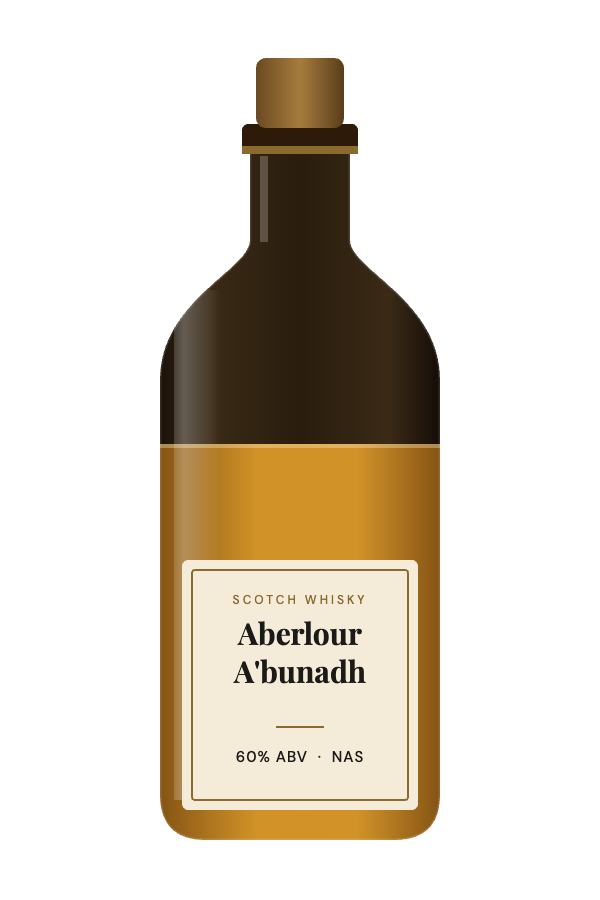
A’bunadh is Gaelic and it’s pronounced something like “ah-boo-nah”. Don’t worry if you get it wrong. Most of us do. What matters more is the number on the bottle, because this is a cask strength whisky and it’s a lot stronger than most things on the shelf.
That’s the first thing to know. It’s not 40%. It’s usually somewhere around 60%, and it changes slightly with every batch.
What it is
Aberlour is a Speyside distillery on the River Spey, in the town of the same name, and it was founded in 1879. It’s owned by Chivas Brothers. A’bunadh is its cask strength single malt, and the name means “of the origin”. The idea is that the whisky is bottled straight from the cask without being diluted, which is meant to be how whisky tasted in the old days. It’s matured in Oloroso sherry casks and has no age statement, so the label doesn’t tell you how old it is.
Every release is a numbered batch, and you’ll find the batch number and exact strength on the label. Fans compare batches online, and some older ones sell for more than the standard price. If you’re buying one, note the batch number so you can look up what other people have said about it.
Strength changes how you drink it
High strength makes a real difference. Neat at 60% will burn if you take a big sip, and it’s hard to taste much besides heat. Most people add a little water, a few drops at a time, and that’s not cheating. It’s how the bottle is meant to be used.
There’s also a practical upside. You can dilute it to your preferred strength, which makes one bottle go a lot further than a 40% bottle of the same size.
Trying it
I tried this neat first, then with water. The batch I had was just over 60%, and you notice that straight away. I expected a big sherry whisky and that’s exactly what it is.
Nose: The nose is dark and rich. Dried fruit, orange peel, dark chocolate and a bit of spice. Neat, there’s a sharp alcohol edge in the background, so I added water before trying again.
Palate: Neat, it’s hot. The sherry sweetness is there, raisins and baking spice, but the strength gets in the way. With a few drops of water it opens up and becomes much easier. Rich, sweet and a bit bitter at the end. It’s good, but it’s a lot of whisky.
Finish: Long and warming. A bit of bitter chocolate stays on the tongue, and the spice hangs around. After water, the finish is smoother, but it’s still a heavy dram.
Sherry, and my own bias
Sherry-cask whisky at this strength can be rich and heavy. It’s often described as dark, with dried fruit and chocolate, and there’s usually some bitterness as well. That can be great if you like it and hard going if you don’t. I tend to prefer smoother, easier whiskies, so this is a bottle where I’d want to separate how I felt about it from how well made it is. A whisky can be properly good and not be your favourite.
It’s a bit too much for me. I can see why people love it, because it’s rich and well made. But I prefer something softer that I can sip without thinking about water. That’s my taste, not a flaw in the whisky.
Other cask strength options
If you like the idea but want to compare, there are a few obvious alternatives. Glenfarclas 105 is also sherried and also around 60%, and it’s often described as a more old-school, drier style. Glenallachie’s cask strength batches are another sherried option with a similar fan base. Away from sherry, Ardbeg Uigeadail mixes sherry and bourbon casks with a lot of peat. Trying two of these side by side is the quickest way to learn what you actually like.
Value
A 70 cl bottle usually costs about £85 in the UK. Because it’s cask strength, a bottle goes a long way, and that makes it better value than it looks. Still, it’s not cheap.
Cask strength malts are often seen as good value, because the strength gives you extra mileage. A’bunadh is regularly named as one of the better-value bottles in that category, though the price changes a lot between countries and over time.
Who should buy it
If you’ve been drinking 40% whisky for a while and want to know what all the fuss about cask strength is, this is a sensible first try. If you’re brand new to single malt, start with something gentler, such as the Aberlour 12 Double Cask Matured, and come back to this one later.
Verdict
Maybe. I’d keep one for occasions when I want something big, but it wouldn’t be my everyday bottle. If you like strong sherry whisky, buy it. If you like smooth and easy, try the Aberlour 12 first.

Dark fruit, dried orange, chocolate and baking spice
Rich sherry sweetness, raisin, spice, a lot of heat neat
Long, warming, a little bitter chocolate
Rich, powerful sherry whisky. Impressive, but too much heat and intensity for my taste.

Thomas Grønvold is the founder of Caskable and a whisky enthusiast who believes the best way to learn about whisky is simply to drink it, compare it, and stay curious. From supermarket favourites to bottles from distilleries around the world, he writes about what he actually tastes and experiences, without pretending you need to be an expert to enjoy a good dram.
View profile →