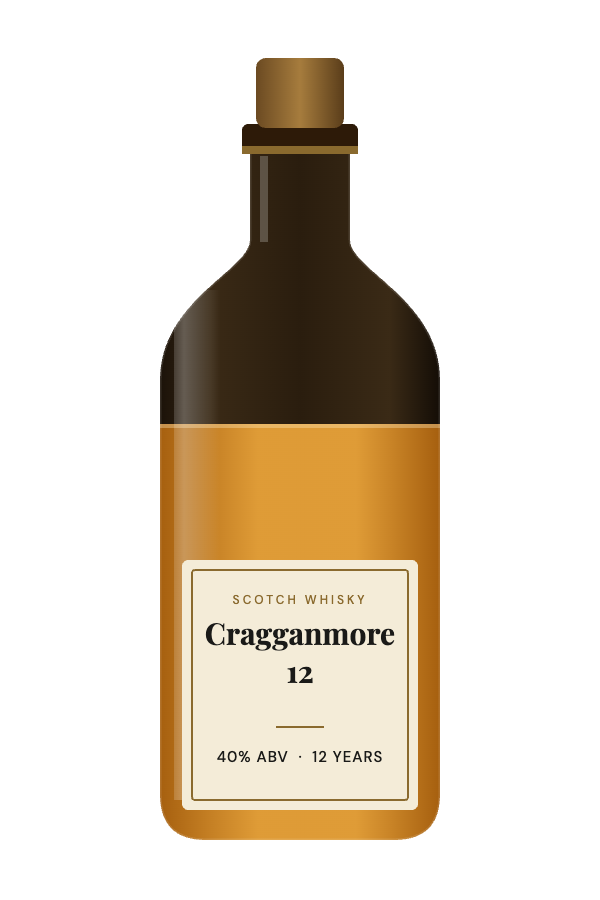
Cragganmore is a name that comes up whenever people talk about Speyside whisky with some depth. It’s one of the Diageo Classic Malts, picked to represent the Speyside style, and it’s known for being unusually complex for the region.
That’s usually a polite way of saying it doesn’t sit in one lane. I wanted to find out what that means in a glass.
What it is
Cragganmore is in Ballindalloch, in Speyside, and was founded in 1869 by John Smith. It’s owned by Diageo. The stills have flat tops, which is unusual, and the distillery uses worm tubs, an older style of condenser. Both are said to give a heavier, more complex spirit than you’d normally find in Speyside.
The 12 Year Old is matured in refill casks, meaning casks that have been used before and give a gentle influence. It’s bottled at 40%. It’s also one of the whiskies used in the Johnnie Walker blends, and it’s often mentioned as a favourite of whisky writers.
In the glass
I tried it neat, on a quiet evening, and again later with a few drops of water. I expected something complex and probably a bit dry. I got that, and a bit of smoke I hadn’t expected.
Nose: heather and honey, with a little smoke and some fresh fruit. It smells like a walk through a meadow near a bonfire. Lots going on, and it takes a while to sort out.
Palate: dry and complex. Malt and honey, with light smoke and a bit of spice. The flavours shift as you sip, and I found it hard to pin down. At 40% it’s gentle on the tongue, but it’s not simple. I enjoyed it, though I didn’t find it relaxing.
Finish: medium to long, dry and slightly smoky. The smoke is faint but lingering. Water made it softer and brought out more honey, which I preferred.
A second glass
I came back to it a few days later, and it was easier. When you know what’s coming, the smoke feels less surprising, and the honey is more obvious. It’s a whisky that rewards a second go.
Against the Speysiders I know
Compared with Glenfiddich 12 or The Glenlivet 12, Cragganmore is drier, more complex and less sweet. Compared with The Balvenie 12 DoubleWood, it’s less honeyed and a bit more serious. If you like Speyside but find the usual ones a bit simple, it’s an interesting step.
Against Jameson, it’s a different kind of drink. Jameson is smooth and sweet and easy. Cragganmore is dry and complex and a bit challenging. I admire it, and I’d choose Jameson for an ordinary night.
Value
A 70 cl bottle usually costs about £45 in the UK. That’s on the high side for a 40% 12-year-old, though it’s a distinctive whisky.
Who it is for
It’s for people who like to think about what they’re drinking, and who enjoy a dry, layered malt. It’s a good bottle for a tasting. If you want something sweet and easy, there are better choices.
How I would drink it
Neat, with a little water. I found the water helped a lot, because it calmed the dry edge and let the honey out. I wouldn’t put ice in it, because the complexity is the whole point, and cold flattens it.
Sharing it
I tried it with a friend who likes smoky whisky, and he loved it. He said it reminded him of a campfire in a flower meadow. That’s more poetic than I’d have managed, and it’s not far off.
One more thing
I tried it with a few drops of water and a piece of mild cheese, and it was a good match. The honey in the whisky and the salt in the cheese went well together. It’s the sort of whisky that benefits from a bit of experiment.
Last word
Cragganmore 12 is a thoughtful whisky for thoughtful evenings. I respect it more than I love it. If you like a bit of complexity and a touch of smoke, it’s well worth the money.
Verdict
Maybe. It’s a good whisky with real character, and it’s more than I need. I’d buy it again if I were in a thoughtful mood, and I’d probably wait for a discount.

Heather, honey, a little smoke and fresh fruit
Dry and complex, malt, light smoke, honey and spice
Medium to long, dry and slightly smoky
Complex, floral and a touch smoky. Interesting, but a bit busy for what I like.

Thomas Grønvold is the founder of Caskable and a whisky enthusiast who believes the best way to learn about whisky is simply to drink it, compare it, and stay curious. From supermarket favourites to bottles from distilleries around the world, he writes about what he actually tastes and experiences, without pretending you need to be an expert to enjoy a good dram.
View profile →