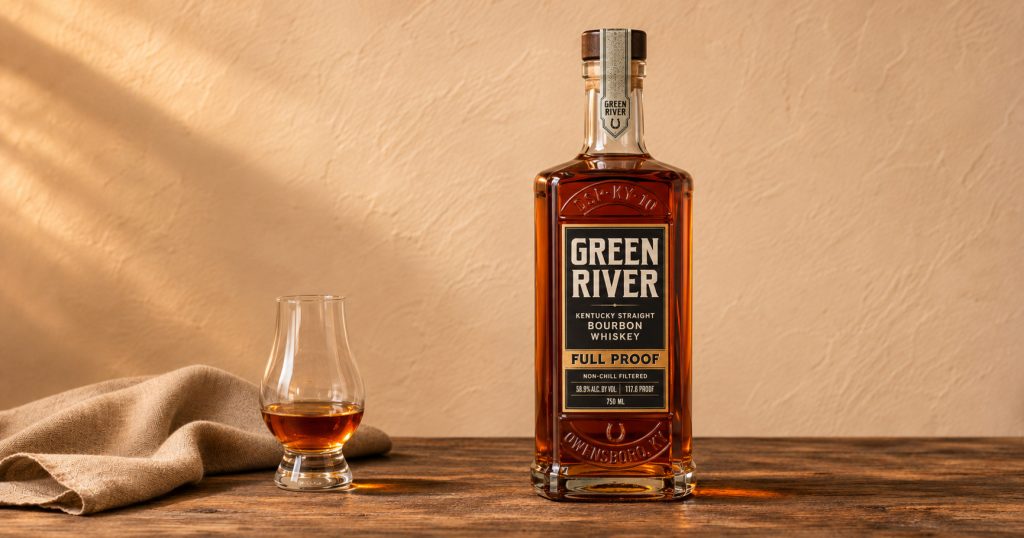
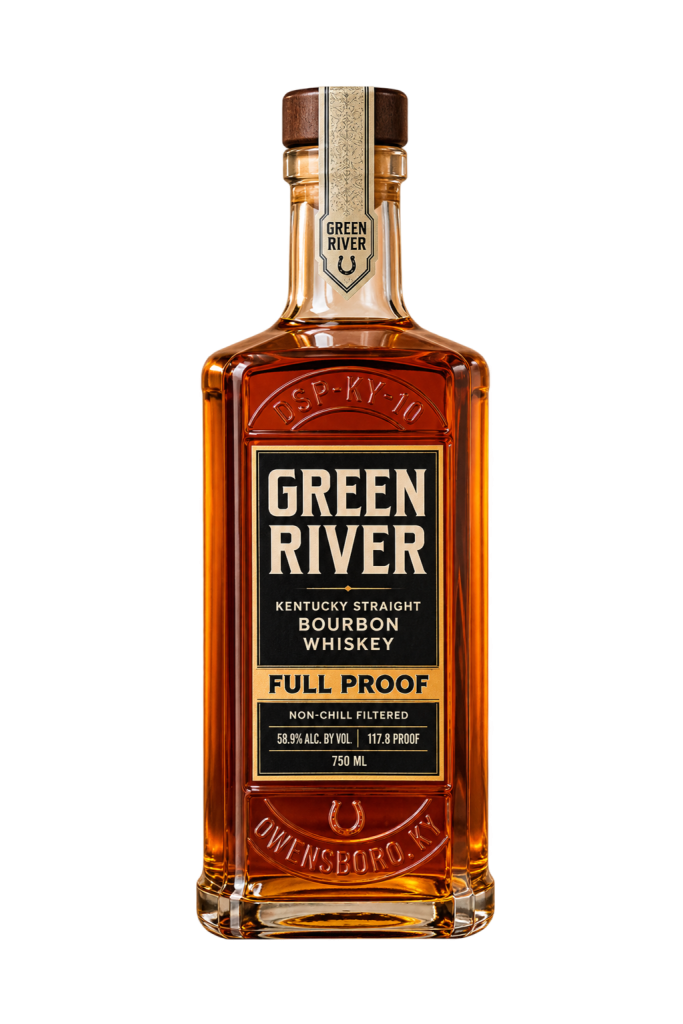
The Green River Full Proof Bourbon review is about a name that came back from the dead. Green River was a famous Kentucky brand, shut down with its distillery in the early 1990s, and then revived in Owensboro, a few miles from where it started. The result is a barrel-strength bourbon of 58.9 per cent that costs about £66.
It is a good deal more interesting as history than as a purchase, and I will try to explain why.
A brand that was dead for twenty-odd years
The Green River name goes back well over a century, and the old distillery in Owensboro closed in the early 1990s after the owner of the time shut it down. A new Green River distillery opened on the same river in 2016, under a different name, and the old name came back in 2020. The distillery is now part of Bardstown Bourbon Company. The Green River distillery page has the long version, with the dates and the owners.
The old advertising slogan, which I will leave you to look up, promised whiskey without a headache. I cannot tell you whether that holds. What I can tell you is that this is a young bourbon, with no age statement, bottled at full proof, without dilution.
Green River Full Proof tasting notes
Caramel, black cherry and a hot cinnamon stick.
The nose is rich and sweet, with dark caramel, cherry, vanilla and a lot of toasted oak. There is a clear note of alcohol and a pinch of cinnamon, and a faint whiff of cooked fruit. It is bigger than I expect from something so young.
The palate is thick and hot. Caramel, vanilla and dark fruit hit first, then pepper and cinnamon, and a clear, sharp heat that does not fade. At 58.9 per cent it needs water, and with a few drops the sweetness opens up and the oak calms down.
The finish is long and warming: cinnamon, burnt sugar and a dry, tannic oak that sticks to your gums. It is a lot, and it is not subtle.
Young, strong and a bit rough
The thing I notice most is how much work the strength is doing. A mature barrel-proof bourbon has depth to match its alcohol. This one has the alcohol and the oak, and a little less of the depth. That makes it fun for ten minutes, and a bit tiring after that.
I do think it is honest. The brand is bottling what is in the barrel, without trying to dress it up, and I respect that. It is just that you can find the same approach done better for less.
How to drink it
With water, always. A teaspoon is enough to settle it, and then it is a perfectly good sipper. A large cube also works. I would use it in a Manhattan if you want a bourbon with enough muscle to stand up to a strong vermouth, though that feels like a waste of a £66 bottle.
Is Green River Full Proof worth £66?
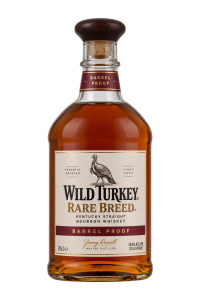
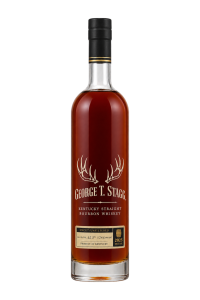
At about £66 it scores 72. Wild Turkey Rare Breed scores 74 at about £55, which is two points better and eleven pounds cheaper. Russell’s Reserve 10 Year Old scores 78 at about £44, and George T. Stagg 2025 scores 74 at about £55.
That is a poor showing. If you want a strong, young-ish bourbon and you would like to try something other than the usual names, it is a fair choice. If you want the best bottle for the money, it is not close.
Four stronger bourbons to compare
If it is strength you are after, these four give more flavour for less money.

Better and cheaper- Caskable score 74/100
- About £55 (70 cl)
- 57% ABV
- USA
A better-balanced barrel-proof blend for eleven pounds less.
Our review →About Wild Turkey →
Older and softer- Caskable score 78/100
- About £44 (70 cl)
- 45% ABV
- USA
Ten years in the barrel and about twenty pounds cheaper.
Our review →About Wild Turkey →
The big one- Caskable score 74/100
- Retail about £120 to £125 if you can find one, often £470 or more on the secondary market (75 cl)
- USA
Barrel proof and far older, at about the same cost as the Rare Breed.
Our review →About Buffalo Trace →
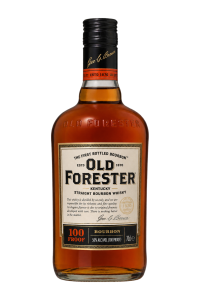
The gentle way- Caskable score 76/100
- About £38 (70 cl)
- 50% ABV
- USA
Fifty per cent and a lot easier, at about thirty-eight pounds.
Our review →About Old Forester →
Verdict
A strong, young, honest bourbon from a name with a good story and a price that does not match the whiskey. I would buy it for the history and not for the glass.
Caskable score: 72 out of 100.