
Better value
Glen Scotia Double Cask
- Caskable score 78/100
- About £36 (70 cl)
- 46% ABV
- Scotland
It is the best-value coastal alternative.
Find a bottle18+ · Affiliate link · Prices may vary

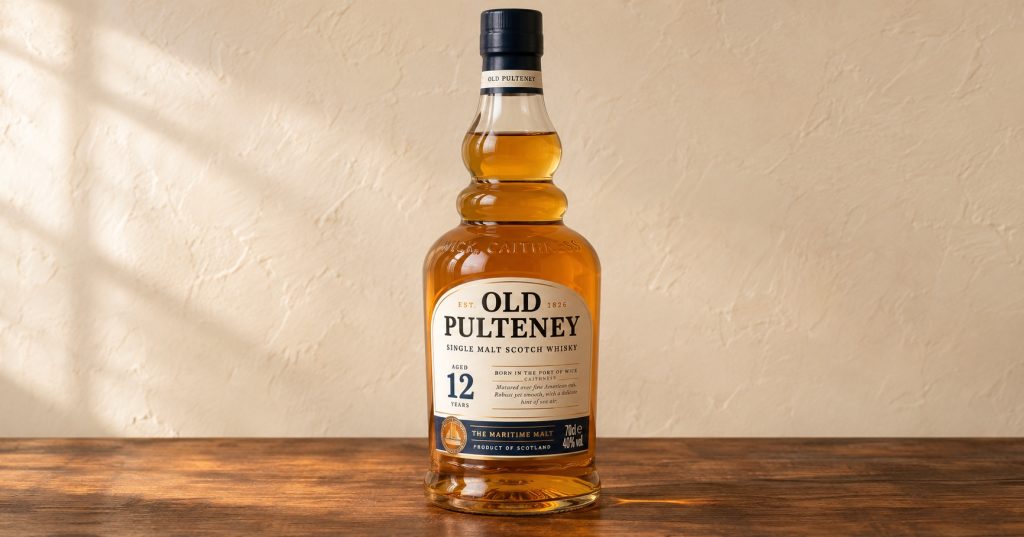
Old Pulteney 12 is called “the maritime malt”, and for once the marketing nickname is an accurate description. This Old Pulteney 12 review is about a salty, honeyed, slightly peppery whisky from the far north-east of mainland Scotland, and it earns a Caskable score of 73 out of 100.
That is a fair mark. It has one of the clearest personalities in the 12-year-old category, even if the flavours are not for everyone.
Old Pulteney is in Wick, in Caithness, a long way north of most people’s Scotch map. The distillery was built in 1826 for the herring boom and is now owned by Inver House, part of the Thai ThaiBev group. The sea is not far away, and the brand leans heavily on that connection.
The 12 is bottled at 40% and is matured entirely in ex-bourbon casks, which fits its sweet, coconutty profile. The seaside character is real: I get a salty tang. Whether that comes from the air, the casks, or the spirit is a debate for another day.
The nose is tropical fruit, honey and malt, with a sea-air or salty edge. I get banana, coconut, honey, vanilla and lime with a slight brininess. It is bright and sweet, with a salty finish waiting behind it.
The palate is sweet and spicy. There is plenty of pepper and a pinch of salt, plus coffee, chocolate and almond, and a smooth toffee body with a briny tang. It has more going on than most 12-year-olds at this price, if you like salt.
The finish is drying, oaky and peppery. The fruits fade and are replaced by malt and oak, with a little spicy heat, then a clean, long finish with salt. It is not a big character, but it is an interesting, slightly rustic malt, and a few points lower than the best.
Neat, in a tulip glass, with a few drops of water. The sweetness and salt are best at room temperature. Ice makes it flat and sugary, so I would skip it.
The salty, honeyed profile suits seafood, so think smoked haddock, crab and oysters. In a cocktail it can work in a Rusty Nail or a Bobby Burns, where the sea air adds a bit of intrigue.
Old Pulteney is named after Pulteneytown, the planned fishing port built in the early nineteenth century by the engineer Telford for the British Fisheries Society. At the time, Wick was the centre of the herring industry, and thousands of fishermen and coopers worked in the town. The distillery was founded in 1826 to serve the thirsty population. Its fortunes rose and fell with the herring, and it was closed from 1930 to 1951.
Today the distillery is owned by Inver House Distillers, part of Thai Beverage, and it is known for the “maritime malt” branding. The sea air is said to influence the maturation, and the warehouses sit close to the harbour. The stills are famously squat, with the lyne arm cut off flat, which gives the spirit a particular weight.
Old Pulteney’s wash still has a distinctive shape, with a flat top. The story is that when the still was installed, it was too tall for the still house, and the workers cut off the top rather than modify the building. The truncated still has been in use ever since, and many believe it contributes to the distinctive character of the spirit.
Whether the story is entirely true, the flat-topped still is real, and the spirit it produces is heavy and slightly oily. Combined with ex-bourbon casks, it creates a whisky with a lovely texture and a salty, honeyed flavour.
Many drinkers describe a salty tang in Old Pulteney, and the brand makes a lot of it. Whether the salt comes from the sea air or the spirit, it gives the whisky a distinctive character. It pairs wonderfully with seafood, particularly smoked haddock, crab and oysters. A dram of Old Pulteney after a plate of fish and chips feels thoroughly right.
At about £38 for 70 cl it is priced right. Glen Scotia Double Cask costs about £36 and scores 78, with a similar maritime flavour. Scapa Skiren costs about £40 and scores 76. Highland Park 12 sits at about £43 with a score of 81.
Old Pulteney is a decent buy, but Highland Park and Glen Scotia both offer better value on Caskable’s scores. Check the retailer link before buying.
A few other bottles are worth a look before you commit to Old Pulteney 12, and the cards below show how they stack up on score and price.
It is the best-value coastal alternative.
It has more pepper and smoke.
If you like salt with your honey, it is another route, though it is a different beast.
People who like a hint of sea in their whisky, and anyone interested in a malt with a clear sense of place. It is also a good choice for seafood lovers. If you want a smooth, easy dram, look elsewhere.
A salty, honeyed, peppery coastal Highland malt with a real personality. Interesting and slightly rough around the edges, in a good way. Caskable score: 73 out of 100.

Banana, coconut, honey and lime with malt and a salty sea-air edge.
Sweet and spicy, with toffee, pepper, a pinch of salt and notes of coffee, chocolate and almond.
Drying, oaky and peppery, with the fruit fading to malt and a clean, salty finish.
Salty, honeyed and peppery. A coastal Highland malt with real personality and a slightly rough edge.

Thomas Grønvold is the founder of Caskable and a whisky enthusiast who believes the best way to learn about whisky is simply to drink it, compare it, and stay curious. From supermarket favourites to bottles from distilleries around the world, he writes about what he actually tastes and experiences, without pretending you need to be an expert to enjoy a good dram.
View profile →


