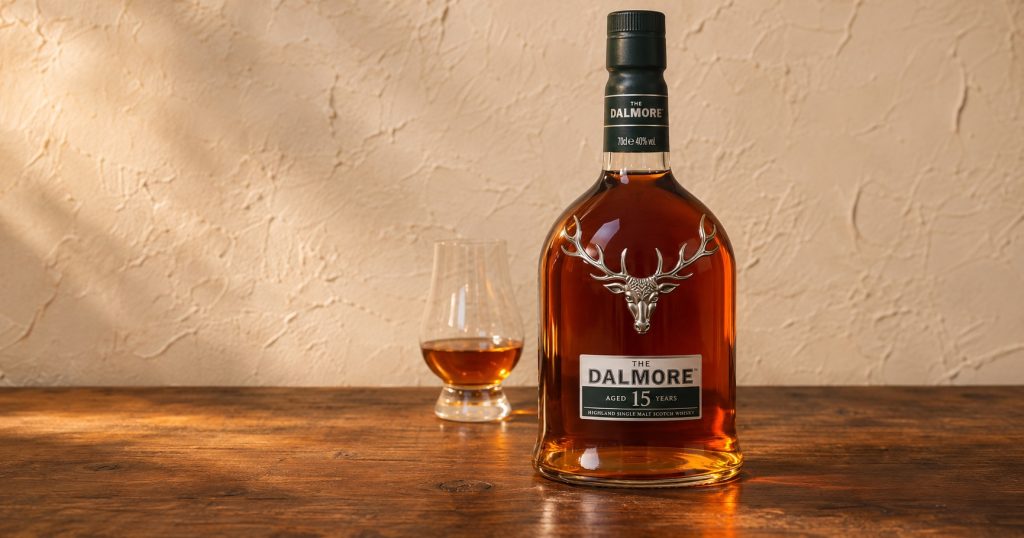
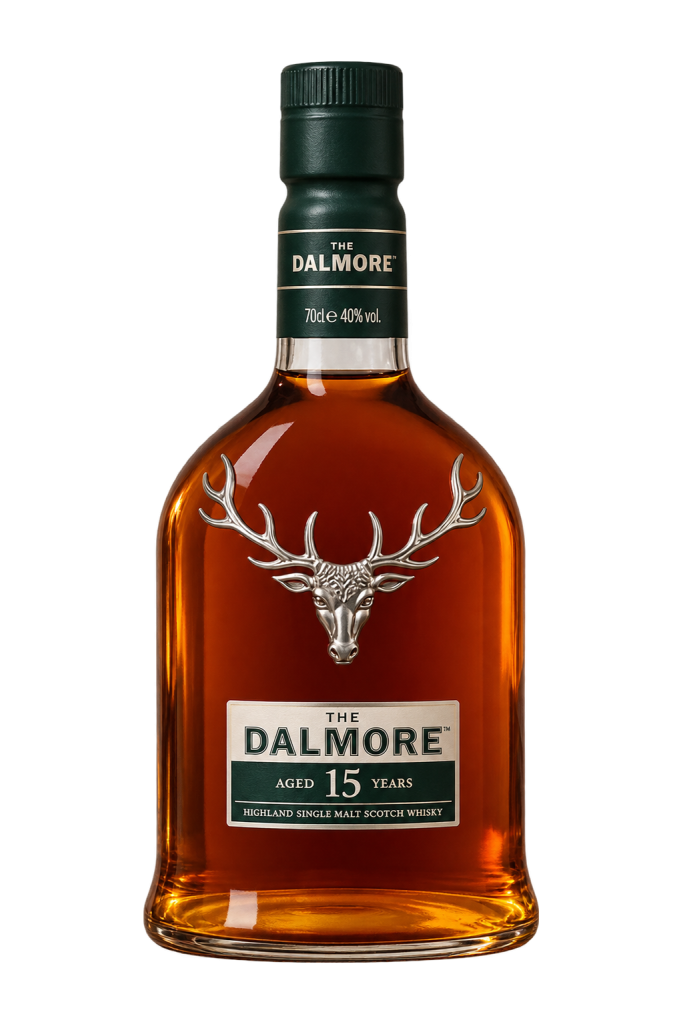
Dalmore 15 arrives with a stag on the label, three kinds of sherry in the finish and a price that assumes you have not read the strength. This Dalmore 15 review is about a 40% Highland malt that costs about £95, tastes of orange and dark chocolate, and is a lovely thing to drink and an irritating thing to buy.
Forty per cent at ninety-five quid. Say it out loud. The whisky is generous and the bottling strength is stingy, and the brand talks about luxury so persistently you start checking your wallet for a hole.
The stag, the stills and the invoice
Dalmore sits on the Cromarty Firth at Alness and is run by Whyte and Mackay, which belongs to the Philippines-based Emperador group. The Dalmore 15 is matured in ex-bourbon and then finished for three years in Amoroso, Apostoles and Matusalem oloroso sherry casks, which is where the dark, spicy sweetness comes from. The entry bottle is the Dalmore 12, and this is what the brand wants you to graduate to.
The stag, if you were wondering, is the Mackenzie clan crest, and it is on everything. The distillery has a taste for the theatrical, including bottles that go for the price of a decent car. The 15 is the polite end of that theatre.
Marmalade and mourning
Orange peel, dark chocolate, and the faint feeling of a very nice funeral.
The nose is orange marmalade first, bitter and sweet at once, with dark chocolate, walnut and coffee, then dried fruit and baking spice. It smells rich and heavy and inviting, like the inside of a fruitcake, with a little oak and a polish of sherry and no sharp edges at all.
The palate is smooth and rounded, orange peel, chocolate, roasted nuts and raisins, then a warm spice. The sweetness is generous without being sticky, and the sherry is obvious without being heavy-handed. It is easy to drink, which is both its strength and its weakness, because the 40% leaves it slightly thin in the middle.
The finish is medium, warm and sweet, with bitter chocolate, orange and a trace of oak. It fades quietly, like someone leaving a party without saying goodbye. I would have liked a louder exit.
How to drink it
Neat, in a glass with a wide bowl and a narrow rim, with perhaps a drop of water though at 40% it hardly needs one. This is a dessert whisky. A square of dark chocolate and a black coffee will do more for it than a fancy cocktail, and I would keep ice well away from the orange and the chocolate.
The age matters less here than the casks. A fifteen-year-old from this place tastes more of sherry than of time, which is fine, as long as you know that the finish is what you are paying for. If you need to know how the casks are doing it, sherry cask against bourbon cask explains.
The 40% problem
Forty per cent is the legal minimum, and a surprising number of expensive whiskies hide behind it. At this price I want more. A bottle with this much sherry and this much marketing at 43% or 46% would be a different whisky, richer in the middle and longer at the end, and I would happily score it a few points higher. Bottling at the minimum is a choice, and it is not one that benefits the person holding the glass.
Does it matter in practice? A little. The nose and the first sip are lovely. It is the middle of the palate that goes missing, the stretch where a whisky should be doing something interesting and instead sits there being agreeable. Water makes it worse, so leave it out. Pour it a few minutes early and let it breathe and it improves, though only to the level of very good.
If this all sounds picky, it is. I am pointing at a £95 bottle, and £95 buys the right to be picky.
Ninety-five pounds for forty per cent
The 12 costs about £60 and scores 77. The 15 costs about £95 and scores 74. That is £35 for three more years and a longer sherry finish, and it is why the 15 scores lower. It is the better whisky in the glass and the worse buy.
Glenfarclas 12 scores 80 at about £48, and Glenfarclas 21 scores 84 at about £200. If sherry is the brief, the Speyside names do it for less money and with fewer stags.
Before you spend £95
Four sherried alternatives, and one that is simply the same distillery for less.
Verdict
Dalmore 15 is rich, orange-scented and well made, and it is a lovely dessert whisky. At about £95 and 40% it is not a bargain, and it does not pretend to be, but it really should cost less.
If it were £70 and 43% I would be writing a cheerier review. As it stands it is a bottle I admire from a respectful distance and buy, grudgingly, for someone else’s birthday.
Caskable score: 74 out of 100.